Episode14 min read
Christophe Boutry: mass surveillance, seen from the inside
Data leaks, crypto kidnappings, Pegasus, Palantir, messaging apps rated out of 10: what to take from 2 hours 21 with Christophe Boutry, formerly of the DGSI.
For the tenth episode of the podcast, my guest was Christophe Boutry, a former counter-terrorism police officer who served at the DGSI, France's domestic intelligence agency, and who now campaigns for the right to privacy. His view fits in two sentences: your data is already out there, and mass surveillance is no longer a distant threat. According to him, France already practises it.
Who Christophe Boutry is
I introduced him at the start as a former hacker for the secret services. He corrected me straight away: he was a police officer.
He joined the French national police by choice, became a judicial police officer and specialised in digital work: forensic analysis of traces, mobile phones, special investigative techniques, from intercepting communications to exploiting what everyone leaves online. Noticed on several cases, he applied to a DGSI recruitment drive and worked there on counter-terrorism until 2018.
He left the service, he says, "for a story that many people can find online". He alludes to it himself later in the episode: everyone has a moral line they swear never to cross, "until the day life puts you in front of a choice".
Today he publishes videos on surveillance and cybersecurity, and he founded Fuites Infos, a site that tracks data leaks in France.
Fuites Infos: nobody is safe any more
Fuites Infos records four to five leaks a day. According to Christophe's figures, the site logged 178 in 2025, then more than 1,000 since the start of 2026, including 170 in October alone. He believes the real number is three times higher, with data resold privately and never claimed. Still according to him, France is the second most affected country in the world, after the United States.
Contrary to what you might think, the state is not the main culprit: institutions and local authorities account for about 20% of the leaks he records, private companies for 80%.
A few cases cited in the episode:
- Political parties, on the left and on the right. Party membership is sensitive data under the GDPR, since it reveals a political opinion.
- The French tax authority (DGFiP), whose leak this summer exposed, according to him, the tax details and income of 678,000 taxpayers.
- The French table tennis federation: 1.6 million members, twenty years of archives never purged, medical certificates and many minors.
For Christophe, the real question is not what leaked, but why the bare minimum of security was not in place. Since the site launched, he has seen one effect: companies communicate faster, because the information is already public. Those that send him a lawyer's letter demanding to be removed see it forwarded to his own lawyer.
How an email address leads to your door
That was my question: why is a leaked email address dangerous?
From an investigator's side, his answer is simple. An email address is tied to a phone number, an active number can be located or tapped, a postal address can be watched. Think of it all as a correlation graph, a map of links. Add social networks, open-source research and stolen databases, and according to him true anonymity only exists for a handful of people who know exactly what to do.
On the criminal side, there are now what he calls "look-ups": paid search engines that aggregate stolen databases. Around ten euros for three or four days of access, sometimes a lifetime subscription. Type in a postal address and you get everyone linked to it, with their credentials. An old leak from the French underwear brand Le Slip Français revealed an order by Sébastien Lecornu, with his former address and phone number.
He then describes a real exploitation chain. A hacked database sells, according to him, for around 5,000 euros on the dark web. Then others squeeze it: fake parcel texts asking for 20 cents, fake bank advisers, fake calls from your broadband provider who already knows your name and your contract.
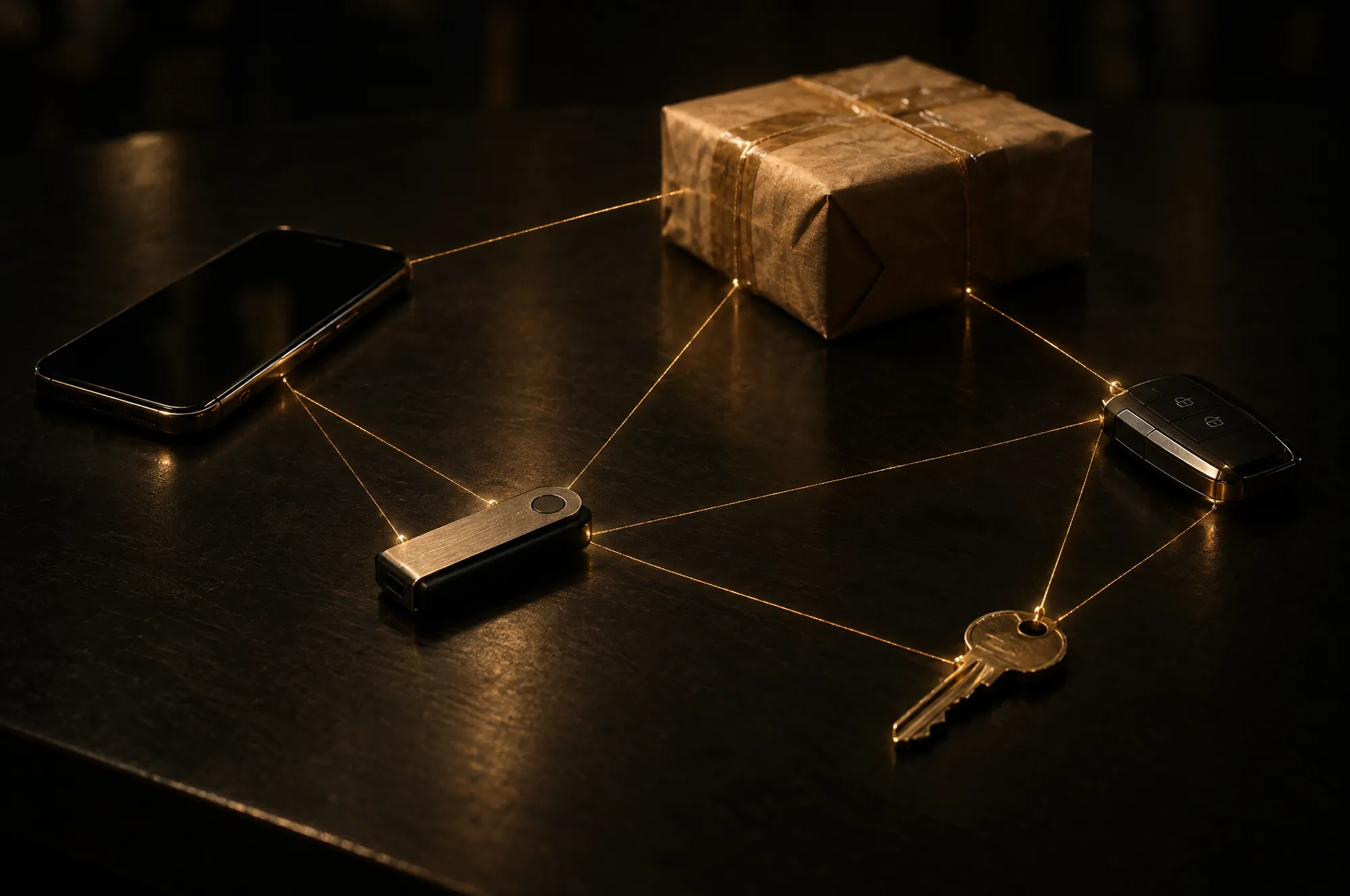
The most serious case is kidnappings linked to cryptocurrency. His example: someone buys a hardware crypto wallet as a Christmas present, without owning any crypto. The seller's database leaks. Cross it with the tax leak to learn their income, then with a vehicle registration leak to learn their car, and that person becomes a target. The people who carry out the kidnappings are hired for the job. The ones who plan them, he says, are never caught.
And it is not only about money. He cites Body Swap, a site that "undresses" women with artificial intelligence from a single photo. Its user database leaked, with each person's requests. Enough to blackmail thousands of people.
His image for those who answer "all our data is out there anyway": when you go to the toilet, you close the door. Not because you have something to hide.
A message to founders and vibe coders
Christophe spoke directly to the founders who listen to the podcast.
His example: a lesbian dating app built with vibe coding exposed each user's precise location, to the second, right in the page's code. When people pointed it out, its creator called it a campaign against her project. His lesson: "Vibe coding isn't bad." But you have to accept criticism, have your code audited, fix it, then sell.
The most common ways in that he sees:
- WordPress, especially with unmaintained plugins, on an outdated version of PHP.
- Classic flaws, such as SQL injection.
- No two-factor authentication on admin and staff accounts. According to him, this is the ultimate way in: the biggest leaks come from credentials collected in other leaks, because an employee uses the same password for their work account and for ordering takeaway.
His conviction: if two-factor authentication were switched on everywhere, "we'd have 90% of the problems solved instantly". An authenticator app, or even a login link by email, already goes a long way.
An investigator's limits
In an interview, Christophe had said that at the DGSI you sometimes had to "play with the limits". I asked him which ones.
The limits are set by the criminal code and the code of criminal procedure: no incitement to commit an offence, strict rules on interceptions and spyware. But for a target considered a priority, an investigator can cast a very wide net. Instead of two or three wiretaps, twenty, with twenty location trackers and surveillance teams, sometimes for nothing. If the right line cannot be found, they can tap the father, the mother, the brother, the employer, the best friend. And the dog's GPS collar, if it has one.
That, for him, is the real limit: proportionality between the intrusion and the expected result.
Connected devices, silent texts and Pegasus
I had read that a speaker can be turned into a microphone. Christophe confirms it, and goes further: a smart TV on Wi-Fi can be switched into listening mode. Even before 2018, inside the service, uncontrolled devices were avoided, and at home, Google Home and Alexa were out of the question.
He tells the story of an engineer who simply wanted to unlock a feature on his own baby monitor with the help of AI, and found himself connected to thousands of robot vacuums and baby monitors of the same brand, all over the world, with the camera and the microphone. His question: if a private individual can do that by accident, what can intelligence services do against a member of parliament or a nuclear safety engineer?

On Pegasus, his reminder: spyware from the Israeli company NSO Group, sold to states, able to infect a phone without a single click, from its number alone, then access the camera, microphone, screen and apps. Still according to him, Morocco was among the buyers, more than 50,000 uses were identified, on journalists, activists, lawyers and politicians, and French ministers were affected, up to Emmanuel Macron. WhatsApp sued NSO after a flaw in its messaging app was exploited.
He also explained the silent text message, which police use to locate a phone. The phone receives a message it never displays, for example every 30 seconds, and its response lets investigators place it by triangulating cell towers: within a few metres in a city, within a few hundred metres in the countryside. Nothing magic: it is a feature designed to configure mobile networks, repurposed within a legal framework.

His point: most of these techniques are not high-level hacking, but the exploitation of what already exists. And by the time the public discovers them, they have been in use for a long time.
"France is a country of mass surveillance"
This is the most political part of the episode. For Christophe, every law is moving toward more tracking. Tools once reserved for terrorism (interceptions, spyware, IMSI catchers, drones, algorithmic video surveillance) are now used for ordinary crime and for social movements.
He condemns violence and looting during protests. But he cites activists placed under restrictions designed for people at risk of carrying out an attack, simply for announcing online that they would join a protest. And the letter from Sébastien Lecornu asking telecom operators whether social networks could be blocked, when the law does not allow it across the whole country.
His message is for both sides: whoever your candidate is, ask yourself what they will do with these tools once in power, because tools change hands.
His American example is striking. In the United States, Flock cameras, powered by artificial intelligence, read number plates and recognise faces in public spaces, linked to police files. To track undocumented people, the immigration police used these cameras and the power of Palantir, which cross-references social networks, all the way to their homes.
Then he takes the reasoning to the absurd. Once these tools are deployed against one group, why stop? Why not check whether a job seeker is really looking for work, by following their phone and their holiday posts?
"The moment you give the state the power to use extremely invasive techniques to track one category of people, you take the risk that one day it turns against you."
Palantir, ChapsVision and sovereignty
Christophe used Palantir in real conditions. The idea: connect very different databases (air passengers, driving licences, vehicles, ID documents, social security, tax, family benefits, telecom operators, social networks) to run one search instead of ten. His image: "a bit like Minority Report". You type a phone number and see the whole graph of people connected to it.
The software does not create data, it processes what it is fed. But the police collect a huge amount: seized phones and computers, detailed call records with locations requested from operators.
Two problems, according to him. Sovereignty first: an American company was installing its software on the DGSI's computers. Then Palantir's worldview, and Peter Thiel's in particular, which he calls "techno-fascist". Palantir chooses which countries it sells its technology to.
France is looking to move away from it, and ChapsVision is positioning itself. This French company already supplies interception and analysis software: even if a Signal message is encrypted, studying the metadata shows who talks to whom, and when. Christophe has not yet seen proof that it matches Palantir, and hopes funding will speed things up. He also acknowledges that these tools are useful against terrorism and drug trafficking.
But they do not replace fieldwork. Drug dealing has gone online, with deliveries ordered on Telegram or Snapchat, and it reaches every background, from villages to wealthy neighbourhoods. In one of his own cases, he even saw the preparation of a terrorist attack funded by cybercrime: credit card fraud and fake documents.
Messaging apps rated out of 10
I like asking my guests to rate things. Here are his scores, with a simple rule: below 5, it is not safe; above 5, there is minimum protection.
| App | Score | His view |
|---|---|---|
| Messenger | "A disaster" | Meta uses the data for its AI |
| Snapchat | 1/10 | No protection, easy to exploit |
| X | 4/10 | Encrypted with a four-digit PIN, too weak |
| Telegram | 5/10 | No end-to-end encryption by default, only in secret chats |
| 6/10 | Meta and its AI, but it brought encryption to the masses | |
| Signal | 9/10 | Excellent, but still requires a phone number |
| SimpleX | His recommendation | No email, no phone number, decentralised |
Two notes. Christophe says Messenger is not encrypted; Meta, however, says it has used end-to-end encryption by default since late 2023. On Telegram, he criticises Pavel Durov for cooperating with the authorities since his arrest in France, after presenting himself as a defender of privacy.
SimpleX is what he uses for sensitive communications. You join without any identifier, add someone with a link shared another way, and messages travel through several servers, which scrambles the metadata. No lag, according to him, calls and video included. He even runs his own relay.
For phones, he uses two systems: GrapheneOS, a free system that installs on Google Pixel phones, and an up-to-date iPhone. He considers Android problematic, because of manufacturer layers and late security patches, except on Pixels. His benchmark: if the police can extract the contents of a locked phone, anyone can. He also rejects the narrative that portrays GrapheneOS users as suspects. And he points out that spyware is most often installed by a partner, relative or employer, not by the state.
The investigation that stayed with him: Trèbes
I asked him which case had marked him. His answer: the Trèbes attack. He was among the first, with his team, to reach the scene, just after Lieutenant Colonel Arnaud Beltrame had been killed having saved lives. He speaks of the emotion, of the guilt of not having been able to prevent it, then of a long investigation in which all their technical and digital know-how served to establish responsibilities.
That, he says, is where the dilemma shows: you need powerful tools for terrorism or child abuse, and at the same time safeguards and oversight.
Prison, justice and AI: where we disagreed
On child abuse, we agree on the urgency. For Christophe, protecting children should be a national priority, but it is sometimes used as a pretext. He cites Chat Control, the European project that wanted to scan our private messages before encryption, now on hold: you do not catch networks by scanning the messages of millions of citizens, you need more investigators, resources and judges.
On sentencing, we do not agree. As a new father, I put myself in the victims' place and find some sentences too light. Christophe answers that locking someone up without treating them changes nothing: he argues for psychiatric follow-up with strict obligations, and prisons that train people instead of damaging them. If you want heavier sentences, it is up to lawmakers to change the law. And before judging, the state must first handle the cases: he cites 70,000 investigations set aside, brought back out this summer.
I also suggested justice assisted by an open, transparent algorithm. For him, AI can help sort data, draft, speed things up, and perhaps relieve civil or administrative courts. But in criminal cases, human nuance is essential. He cites the Jubillar case: a man sentenced to 30 years with no body and no weapon, who according to him ended up confessing on appeal. And the police do not use AI yet for a very concrete reason: they must be able to certify that evidence was never altered.
Simple habits
What Christophe recommends, plus my own tip about password managers:
- A second SIM card for a few euros, used only for online sign-ups.
- Do not give your real details when a site does not need them.
- Two-factor authentication everywhere, with an authenticator app.
- A password manager, and a different password for each site.
- Signal or SimpleX for conversations that matter.
- An up-to-date iPhone or GrapheneOS rather than an Android phone that no longer gets its patches.
- No voice assistant or smart TV in rooms where you discuss sensitive matters.
- Help older relatives use all of this, because they are the most exposed.
What I take away
- Surveillance can turn against us. It was not necessarily my view before the episode, and it made me think. Tools built for one group of people can end up targeting opponents, protesters, or anyone.
- Nine times out of ten, two-factor authentication is enough. It is the simplest measure, and the most neglected.
- A lack of competition protects the worst offenders. People keep their provider after a leak because they have no real choice.
- On sentencing, I side with the victims. Christophe insists on treatment and prevention. We did not agree.
Watch the episode
The full conversation runs 2 hours 21 minutes, in French: La surveillance de masse est déjà là : il l'a vue de l'intérieur.
To follow Christophe's work: his YouTube channel @Ced_haurus, his X account, his Instagram, and his site Fuites Infos.
The next episodes are coming to YouTube @axelgaubert. To miss nothing, the newsletter is here.
This article reports what was said in the episode, translated from French: the figures quoted are Christophe Boutry's. The illustrations are AI-generated.